 GetAway4You
Destination stories · 19 October 2026 · 6 min read
Part of the Stockholm collection
From ABBA to Avicii: How Sweden Became a Pop Music Superpower
ABBA, Roxette, Avicii and Max Martin: how Sweden became one of the world's most remarkable pop-music ecosystems.

When I travelled to Stockholm, one museum was absolutely going onto the Stockholm itinerary: ABBA The Museum.
There are artists who become successful, and then there are artists who become part of a country's international identity. ABBA unquestionably belongs to the second category.
But walking around Stockholm and later thinking about all the Swedish music I grew up with made me realise something: Sweden's influence on pop music is much bigger than ABBA.
ABBA. Roxette. Ace of Base. A*Teens. Robyn. Avicii. Swedish House Mafia. Zara Larsson. Loreen.
And behind artists from completely different countries? Swedish songwriters and producers such as Max Martin.
For a country of around ten million people, that's an extraordinary musical footprint.
So how did Sweden become such a force in international pop?
It Is Impossible Not to Start With ABBA
For many people around the world, Swedish music begins with ABBA.
Agnetha Fältskog, Björn Ulvaeus, Benny Andersson and Anni-Frid Lyngstad transformed themselves from four Swedish musicians into one of the most recognisable pop groups in history.
Their international breakthrough came after winning the Eurovision Song Contest in 1974 with "Waterloo".
What followed was remarkable: songs such as Dancing Queen, Mamma Mia, Take a Chance on Me and The Winner Takes It All became part of global pop culture.
Decades later, people who weren't even alive when ABBA originally performed together know the lyrics.
Visiting ABBA The Museum in Stockholm made this history feel less abstract to me. Suddenly the costumes, performances and personalities behind songs I had known for years had a physical home.

And ABBA's influence didn't disappear when the group stopped performing together in the early 1980s.
It kept travelling.
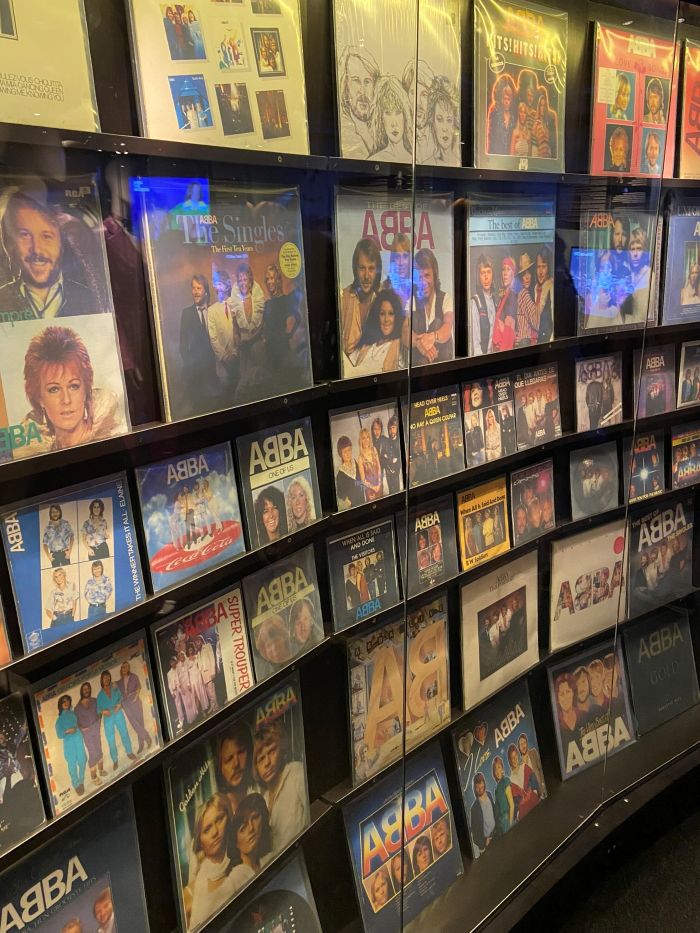
A*Teens: ABBA for a New Generation
This is where A*Teens become especially interesting.
If you grew up around the late 1990s and early 2000s, there is a good chance you remember them.
Originally called the ABBA Teens, the Stockholm group began by recording ABBA covers. Their debut album introduced songs such as Mamma Mia and Gimme! Gimme! Gimme! to a generation raised on glossy late-1990s pop.
For me, that makes them an important part of this story.
They weren't simply another successful Swedish act. They became a bridge between two generations of Swedish pop music.
ABBA's songs were already classics; A*Teens repackaged them for MTV-era teenagers.
And Sweden kept going.
Roxette, Ace of Base and the Swedish Pop Formula
By the late 1980s and 1990s, Sweden had proved that ABBA was not a one-off.
Roxette, led by Marie Fredriksson and Per Gessle, became international stars with songs including The Look, Listen to Your Heart and It Must Have Been Love.
Then came Ace of Base, whose reggae-influenced pop sound produced enormous international hits including All That She Wants and The Sign.
Different artists, different styles — but something about Swedish pop kept translating remarkably well beyond Sweden.
Strong melodies mattered.
Clean production mattered.
And perhaps most importantly, Swedish musicians became exceptionally good at writing choruses that survived language and cultural boundaries.
The Swedish Producers Behind the World's Biggest Songs
This is where the story becomes even more interesting.
Some of Sweden's greatest contributions to international music came from people whose names the average listener might not immediately recognise.
The most famous example is Max Martin.
Martin became one of the most successful songwriters and producers in modern pop, working with international artists across several generations.
And he wasn't alone.
Swedish writers and producers became deeply embedded in the international music industry. Sweden even established a governmental Music Export Prize in 1997; past recipients include Max Martin, Roxette, Robyn, Swedish House Mafia, Avicii, Zara Larsson, First Aid Kit and Loreen.
In other words, Swedish music's international success isn't only about performers.
Sweden became exceptionally good at the architecture of pop music itself.

Then Came Avicii
For my generation, one Swedish artist is impossible to leave out: Avicii.
Born Tim Bergling in Stockholm, Avicii became one of the defining figures of electronic dance music.
Songs such as Levels, Wake Me Up and Hey Brother moved far beyond nightclubs and festivals. His music crossed between EDM, pop, folk and country influences in ways that helped reshape mainstream electronic music.
His death in 2018 at only 28 made his story tragically short.
But his influence is enormous.
Today, walking around Stockholm knowing that this quiet-looking Scandinavian capital produced one of the world's biggest electronic artists adds another layer to the city.

Swedish House Mafia and Stockholm's Electronic Side
Avicii was not Sweden's only global force in electronic music.
Swedish House Mafia — Axwell, Steve Angello and Sebastian Ingrosso — helped bring festival-scale electronic music into the mainstream.
Tracks such as Don't You Worry Child became anthems far beyond Sweden.
Between Avicii and Swedish House Mafia alone, Stockholm became associated with a completely different musical world from the glittering costumes and harmonies of ABBA.
And that's what makes Swedish music so fascinating.
It kept changing without disappearing.
Robyn, Zara Larsson, Loreen and the Women of Swedish Pop
Sweden has also produced an extraordinary collection of female pop artists.
Robyn built an international career while maintaining a distinctive electronic-pop identity, with Dancing on My Own becoming one of her defining songs.
Zara Larsson, another Stockholm-born artist, became an international pop star with hits including Lush Life.
Then there is Loreen, who achieved the rare feat of winning Eurovision twice — first with Euphoria and later with Tattoo.
The Swedish government's own list of Music Export Prize winners tells the story rather well: Robyn won for 2010, Zara Larsson for 2016 and Loreen for 2023.
Why Is Sweden So Good at Pop Music?
There isn't one magical explanation.
Sweden has a strong tradition of music education, a domestic industry comfortable working internationally and generations of artists who grew up seeing Swedish musicians succeed outside their own country.
English proficiency also made it easier for Swedish artists and songwriters to work directly within the global pop market.
Then success created success.
Once Swedish producers, songwriters and artists became connected to the international industry, the infrastructure and experience remained for the next generation.
Experiencing Swedish Music in Stockholm
This is why I think ABBA The Museum is worth visiting in Stockholm, even if you don't consider yourself a huge ABBA fan.
You're not just visiting a museum about four celebrities.
You're standing at the beginning of a much bigger story.
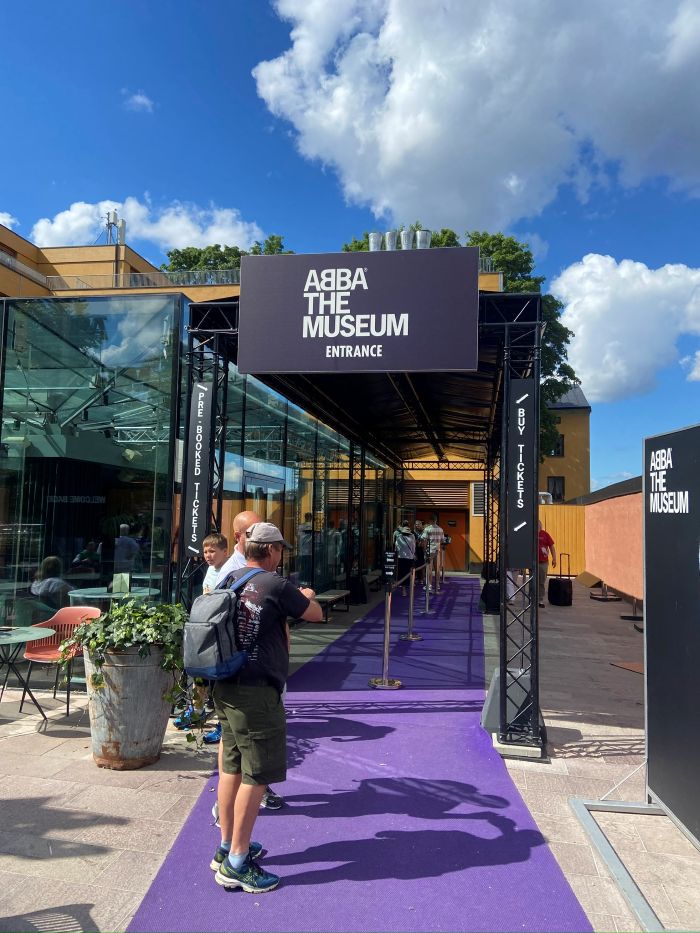
ABBA showed that a Swedish group could become a global phenomenon.
Roxette and Ace of Base proved it could happen again.
A*Teens brought ABBA to another generation.
Max Martin helped write the soundtrack for international artists.
Robyn pushed pop in another direction.
Avicii and Swedish House Mafia helped transform electronic music.
Zara Larsson and Loreen continued the tradition.
When I arrived in Stockholm, I associated Swedish music mainly with individual artists.
I left seeing a pattern.
Sweden didn't simply produce a few famous musicians.
It built one of the world's most remarkable pop-music ecosystems.
And after visiting Stockholm, ABBA suddenly felt less like the entire story and more like the perfect opening chapter.
Start here
The Full Itinerary
Everything I wrote about Stockholm follows this plan — read it first, then pick the day or the place you want to go deeper on.

Keep reading
More From Stockholm


Travel guides · 5 min read
Uppsala In One Day – A Day Trip From Stockholm
One easy day out of Stockholm: the Royal Mounds of Gamla Uppsala, the old church and bell tower, the Viking museum and an afternoon in the…
28 October 2026

Hotel reviews · 5 min read
Sheraton Stockholm Hotel – A Touch Of Luxury In The Heart Of Stockholm - Review
An elegant hotel in Norrmalm with an unbeatable central location — a full look at the rooms, dining, wellness and what to consider before…
28 October 2026


Travel guides · 7 min read
What to Eat in Stockholm: Meatballs, Fika and Toast Skagen
Köttbullar, fika, Toast Skagen and shrimp salad: the traditional Swedish food I tried in Stockholm, and where to eat it.
12 October 2026

Hotel reviews · 4 min read
Elite Hotel Marina Tower Stockholm - Review
Elite Hotel Marina Tower, Spa & Resort, located in the Danviken/Saltsjöqvarn area in Stockholm, just across the water from Djurgården.
9 October 2026


Destination stories · 7 min read
The History of Stockholm: Vikings, Kings, the Vasa and a City Built on Water
From Viking burial mounds in Old Uppsala to the Vasa warship and Gamla Stan: how I walked through 1,000 years of Swedish history in and…
5 October 2026

